Rubbish Boy: Recycling and Sustainability Commitment
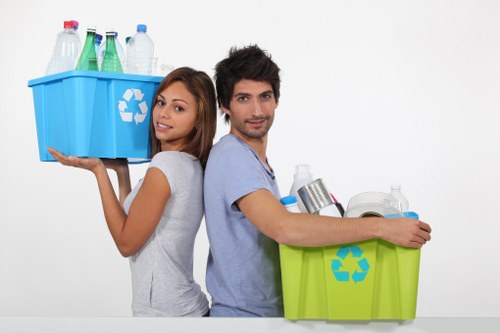 At Rubbish Boy we take a practical, measurable approach to recycling and sustainability. Our ambition is clear: to reduce landfill dependence and increase resource recovery across the communities we serve. Whether you search for Rubbish Boy or rubbish boy services, our work centers on real outcomes ??? not just words on a page. We set targets, report progress, and continuously adapt to local council policies so our recycling efforts complement borough-level separation schemes.
We have set a bold corporate recycling percentage target: to achieve a 70% recycling and reuse rate of collected material by 2028 across our routes. This target covers household-like collections, commercial clearances, and event waste streams. RubbishBoy teams are trained to sort at source where permitted and to use on-route separation bins to maximize capture of paper, cardboard, mixed plastics, glass and metal. Our aim is that more materials are diverted from disposal every year while maintaining safe and efficient service delivery.
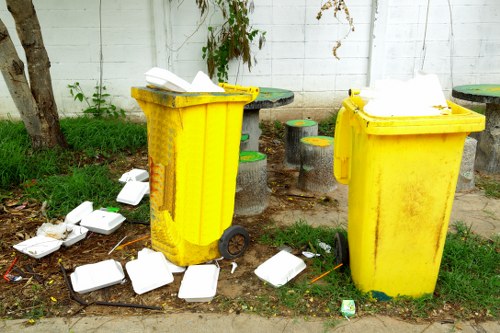 Our local knowledge matters. In boroughs that operate multi-stream kerbside systems ??? for example separate food waste, dry recycling and residual collections ??? Rubbish-Boy works to mirror those separations wherever practical. We coordinate with local transfer stations and civic amenity sites to make sure materials collected by Rubbish Boy align with municipal sorting standards and end up in the right downstream processing stream rather than being co-mingled unnecessarily.
We maintain direct relationships with a network of local transfer stations to ensure efficient, low-impact movement of recyclable materials. Key facilities we regularly use include:
- Northside Transfer Station ??? convenient for inner borough collections and rapid turnaround of dry recycling;
- Riverside Materials Park ??? specialist processing for bulky wood, metal and construction waste;
- Greenfield Sorting Hub ??? sorting for mixed recyclables where further separation is required before reprocessing.
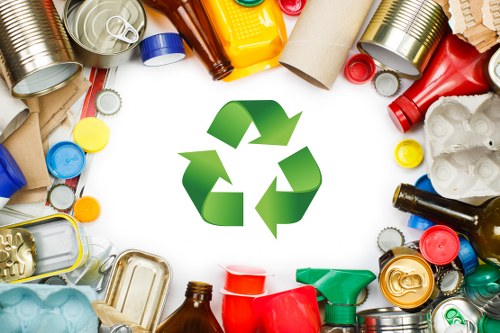 These transfer stations allow Rubbish Boy recycling teams to consolidate loads, reduce vehicle movements, and send materials on to reputable processors and reprocessors. By using nearby hubs we cut mileage and emissions while improving material quality through early segregation and correct routing.
Partnerships with charities and social enterprises are central to our reuse-first philosophy. We establish links with local non-profits that accept furniture, appliances and textiles for refurbishment and redistribution. Our approach includes:
- Direct handover of reusable items to charity partners for repair and resale;
- Collaboration on community collection days where Rubbish Boy provides logistics and sorting expertise;
- Support for apprenticeships and training with partner organisations to grow local circular-economy skills.
Through these collaborations, Rubbish Boy helps keep quality goods in circulation and out of the recycling stream where reuse is a better environmental outcome. We track the tonnage diverted to charitable reuse and report progress as part of our sustainability dashboard.
To further reduce our carbon footprint we are rolling out a fleet of low-carbon vans and vehicles. Our investments include electric vans for inner-urban collections and Euro-6 low-emission diesel trucks for heavier loads where zero-emission options are not yet viable. Each new vehicle is chosen for fuel efficiency, payload optimization and compatibility with on-board separation systems to streamline recycling on collection.
How Rubbish Boy supports borough-level waste separation
Many local authorities have specific guidance on separating food waste, glass, paper and plastics. Rubbish Boy aligns operations to these rules by:- Reviewing borough policies and training crews accordingly;
- Providing labeled collection containers to mirror council color-coding where feasible;
- Communicating clear sorting instructions at point of pickup to reduce contamination.
Monitoring, reporting and continuous improvement
We use route-level data to monitor recycling performance in near real-time. Regular audits of loads at transfer stations help us measure contamination rates and adjust crew practices. By combining data with feedback from our processing partners, Rubbish Boy continuously refines collection methods to lift recycling yields and lower disposal rates.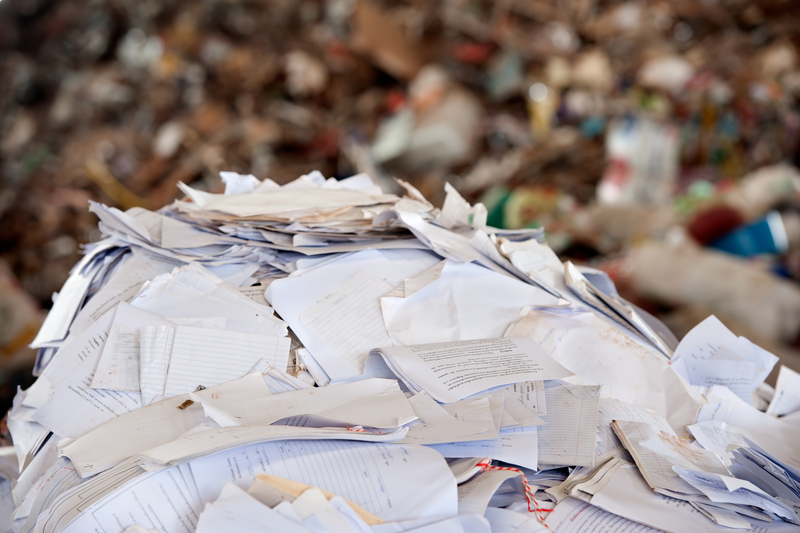 Sustainability at Rubbish Boy is not an add-on ??? it is embedded in operations. We apply the waste hierarchy: prevent, prepare for reuse, recycle, recover, and dispose as a last resort. Investments in lightweight packaging recovery, segregated textiles collection and community reuse initiatives are tangible ways we push material flows higher up that hierarchy.
We also emphasize transparency. Rubbish Boy publishes annual summaries of tonnages diverted to recycling, to reuse, and to energy recovery. We report progress toward our 70% recycling target and highlight the impact of introducing low-carbon vans and expanded charity partnerships. This makes it easier for commissioners, councils and residents to see the environmental benefits of our work.
![A row of three large, dark green refuse bags filled with mixed rubbish, placed on the pavement next to a white wall in a residential area. The bags appear to be made from thick plastic material, with some showing signs of wear and minor tearing. Behind the bags, there is a small, raised garden bed enclosed by a low stone wall, containing a few green plants and small rocks. To the right, part of a grey decorative metal gate with an intricate geometric pattern is visible, along with a section of a paving slab. The bags are positioned close to the curb on a grey tarmac road with white dashed lane markings, suggesting the location may be a quiet street in a town. The overall scene depicts typical household rubbish awaiting collection, aligning with services provided by Rubbish Boy in local communities around [POSTCODE]. The lighting is natural and diffuse, indicating daytime with overcast weather, and the environment appears clean and well-maintained except for the rubbish bags.](/pub/_photos/rubbish/f1341655848.jpg) In summary, whether you find us as Rubbish Boy, RubbishBoy or Rubbish-Boy, our sustainability program is built on measurable targets, smart local partnerships with transfer stations and charities, and a modern low-carbon fleet. We remain committed to supporting boroughs' separation schemes, diverting useful materials for reuse, and increasing recycling rates across every route we operate.
In summary, whether you find us as Rubbish Boy, RubbishBoy or Rubbish-Boy, our sustainability program is built on measurable targets, smart local partnerships with transfer stations and charities, and a modern low-carbon fleet. We remain committed to supporting boroughs' separation schemes, diverting useful materials for reuse, and increasing recycling rates across every route we operate.